SSAC INNOVATION ECOSYSTEM SCOPING AGREEMENT
Project leads – Professor Julie Jacko, Professor of Health Informatics and Data Science, Chief Academic Officer of the School of Population Health Sciences and the Usher Institute and College Dean of Innovation and Engagement, University of Edinburgh and Dr Evgenia Yakushina, KTP Development Partner, Principal Knowledge-Exchange Fellow, National Manufacturing Institute Scotland (NMIS)
Project Scope
This project will support the Scottish Government in strengthening Scotland’s innovation performance by identifying the systemic barriers, enablers, and policy levers that influence the adoption and scaling of innovation across businesses and sectors. The work will move beyond broad innovation themes to develop practical, evidence-based recommendations that improve the conditions for innovation across Scotland’s economy.
Background and Context
Innovation is a critical driver of productivity, competitiveness and long-term economic growth. Despite strong research capabilities and emerging sectoral strengths in areas such as energy transition, life sciences, advanced manufacturing, and data technologies, Scotland has a comparatively low proportion of innovation-active businesses. According to the UK Innovation Survey (2020–2022), only 32.4% of Scottish businesses report being innovation active.
This gap suggests that the challenge is not primarily scientific capability but rather systemic barriers that limit the adoption, scaling and diffusion of innovation. These barriers may relate to regulatory environments, procurement systems, access to finance, workforce skills, or misalignment between academic incentives and industrial needs. A stronger qualitative and system-level understanding of these barriers is required to inform effective policy interventions. This work will directly support the delivery of Scotland’s National Innovation Strategy and the National Performance Framework objectives on productivity, fair work and sustainable economic growth.
Project Objectives
The project will:
- Identify systemic barriers that limit innovation adoption and scaling in Scottish businesses.
- Examine the interaction between research capability, policy frameworks, skills systems and market incentives, across sectors.
- Explore how existing innovation infrastructure and programmes can be used more effectively.
- Identify opportunities for mission-oriented innovation aligned with Scotland’s National Innovation Strategy.
- Provide actionable policy recommendations that could increase the share of innovation-active businesses.
Focus
The project will focus on four priority sectors that represent significant strategic importance to Scotland’s economy and innovation ecosystem, being mindful of how regional disparities and place‑based factors influence innovation adoption across urban, rural and island communities in Scotland. The project will also have a cross-cutting theme of Data/Digital/AI, which is highly relevant across all four sectors.
Four Priority Sectors
- Healthcare
- Life Sciences
- Advanced Manufacturing
- Energy
Cross-Cutting Theme
- Data / Digital / AI
Key Questions for Investigation
- Policy and System Barriers: Which policy interventions would have the greatest impact on improving Scotland’s innovation performance?
- Innovation Adoption: Why do many proven innovations struggle to move beyond pilots into widespread adoption across public services and industry?
- What are the financial barriers to improving access to venture/scale-up capital?
- Innovation Ecosystem: How can Scotland maximise the impact of its existing innovation infrastructure, including universities, innovation centres, catapults and enterprise agencies?
- SME Participation: What factors prevent SMEs from adopting new technologies, processes or business models?
- Talent and Skills: How do skills, incentives and career pathways across academia, industry and government affect translational research and innovation uptake?
- Mission-Led Innovation: How can Scotland adopt a more mission-oriented innovation approach that mobilises cross-sector collaboration and delivers measurable economic outcomes?
- How can value procurement and commissioning be used more effectively as a demand-side lever to accelerate the adoption and scaling of innovation?
Project Governance and Delivery Structure
The subgroup will prioritise / group the key questions and establish a manageable number of dedicated sub-working groups. Each group will be responsible for progressing evidence gathering, stakeholder engagement, and the development of recommendations corresponding to its remit.
Each sub-working group will include: 1) A Delivery Lead responsible for coordinating the work and ensuring progress against agreed objectives; and 2) Associated participants drawn from relevant expertise across academia, industry, government, and innovation intermediaries.
Project Approach and Methodology
- Evidence Review and Horizon Scanning: conduct a rapid scan of international innovation policy approaches and best practices.
- Review existing Scottish and UK evidence, including innovation surveys and productivity data, policy reports and strategy documents, and existing evaluations of innovation programmes.
- Map the Innovation System, drawing upon prior work: document and analyse the structure of Scotland’s innovation ecosystem, including research institutions, public innovation infrastructure, industry clusters and funding mechanisms.Map fragmentation and duplication across Scotland’s innovation support landscape, including overlapping initiatives, regional variation, and opportunities to improve coordination across agencies and centres.
- Assess where systemic barriers occur in the innovation pipeline (research → development → adoption → scale).
- Engage with representatives from: industry and SMEs, universities and research institutes, investors and innovation intermediaries, public agencies and policymakers.Assess public trust, societal acceptability and data governance considerations—particularly within healthcare and life sciences—which influence whether innovations are adopted and sustained at scale.
- Case Studies - document examples of successful and unsuccessful innovation adoption and scaling in Scotland and internationally.
- Identify enabling factors such as regulatory support, procurement mechanisms, skills availability, or financing models.Assess opportunities for adaptive or innovation-friendly regulation, including testbeds, regulatory sandboxes and data-sharing frameworks.
- Evaluate existing policy tools and identify gaps in Scotland’s innovation support system.
- Develop a prioritised set of practical policy interventions.
- Assess the potential economic impact of proposed policy interventions, including effects on productivity, business growth, and international competitiveness.
Deliverables
- Evidence Summary Paper: A brief document summarising the key systemic barriers and opportunities for innovation in Scotland.
- Final Advisory Report: a comprehensive report including analysis of barriers and enablers, international comparisons, policy recommendations, and proposed implementation pathways.
- Presentation of Findings: Briefing and presentation of results to the Scottish Government Innovation Policy team and relevant stakeholders.
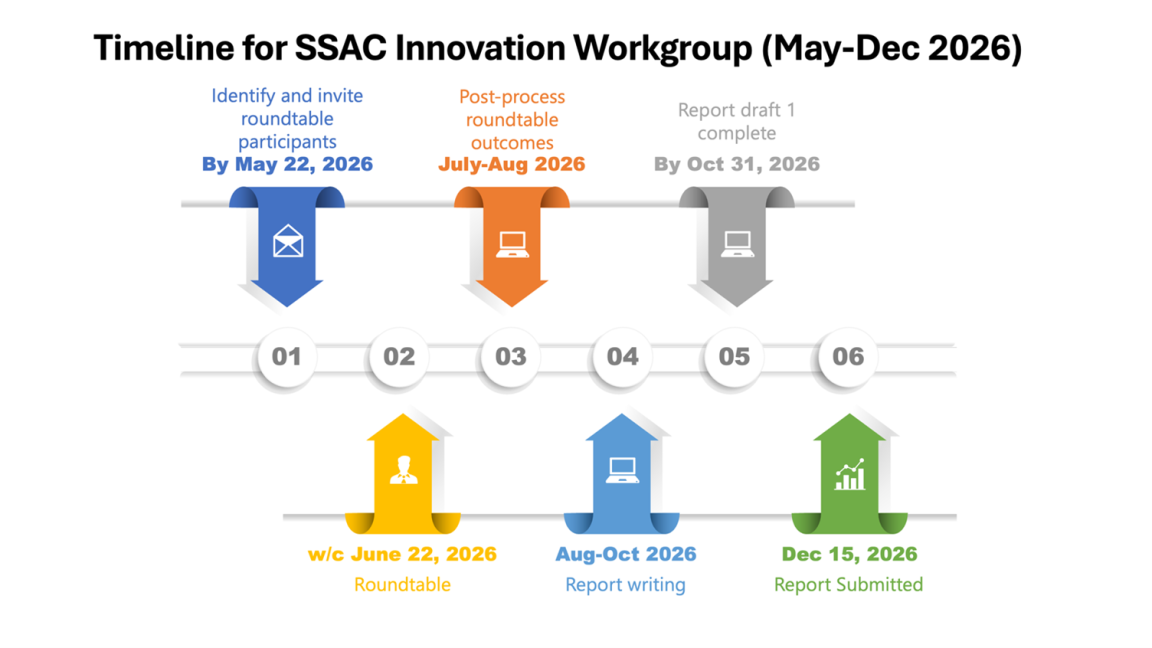
Indicative Timeline
Phase 1 – Evidence review and system mapping
Phase 2 – Stakeholder engagement and consultations
Phase 3 – Case studies and policy analysis
Phase 4 – Development of recommendations and final report
The timeline is as follows: